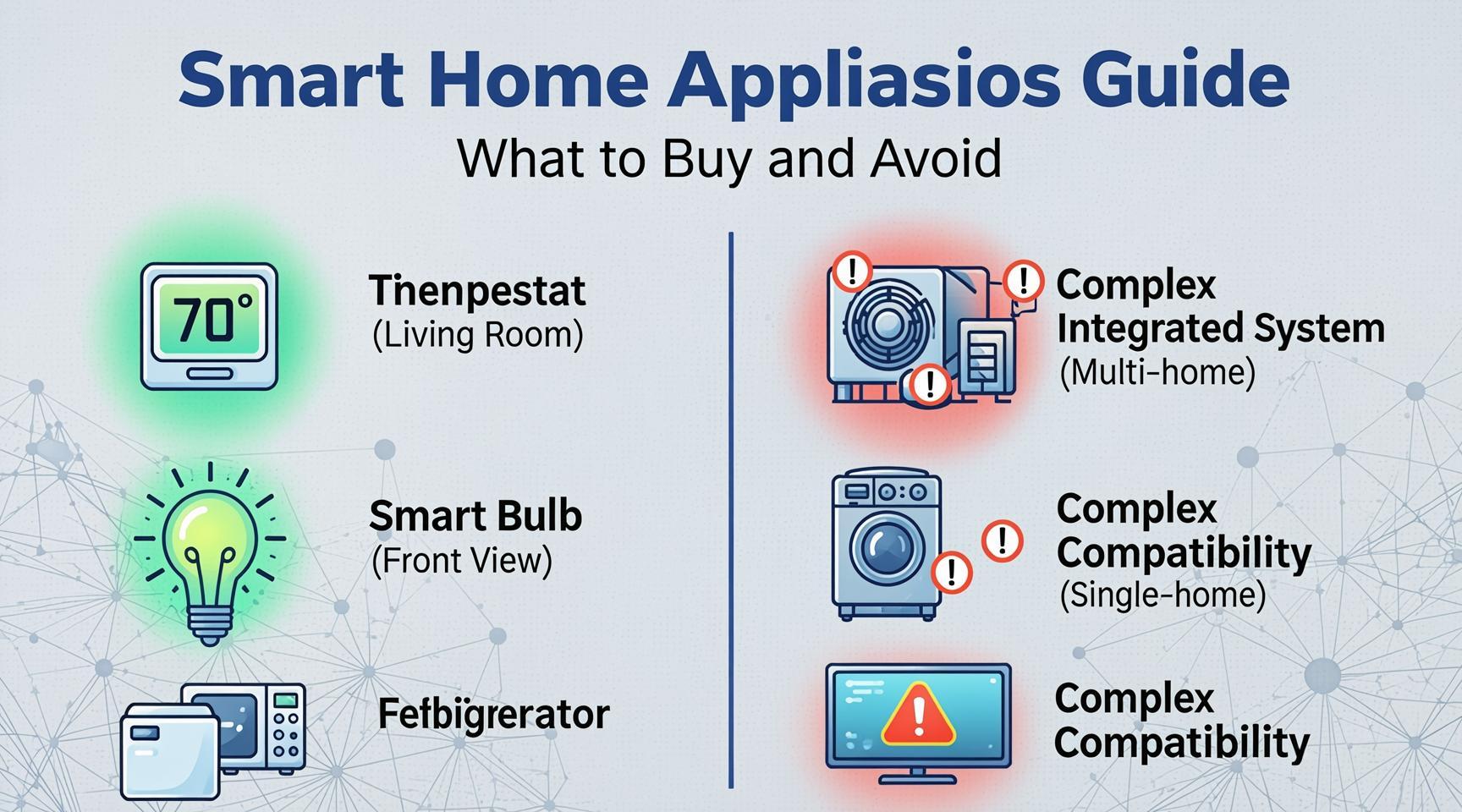
I bought my first smart plug five years ago. I wanted my coffee maker to start before I got out of bed. It felt like living in a sci-fi movie. Today, my kitchen is full of connected devices. Some of them save me hours of work every single week. Others are just expensive paperweights that require constant software updates. I wrote this smart home appliances guide to help you sort the helpful technology from the useless gadgets.
Why Most People Buy the Wrong Smart Tech
We have all seen the commercials. A person taps a screen on their refrigerator to see how many eggs they have left while they are at the grocery store. It looks cool. It feels futuristic. But let’s be honest. When you are actually at the store, you probably just text someone at home or guess. You do not open an app to stare at a live video feed of your dairy shelf.
People often buy appliances based on flashy features they will never use. Manufacturers love to add touchscreens and voice controls to everything. It allows them to charge double the price. But more features mean more things that can break. If your toaster has an operating system, what happens when that system crashes? You cannot make toast.
The best smart appliances do not try to do everything. They do one or two things really well. They solve actual problems, like telling you when your dryer is done or turning off the oven if you forgot to do it yourself.
The Smart Home Appliances Guide to Kitchen Gear
The kitchen is the most expensive room in your house to upgrade. It is also where smart technology can either help you the most or annoy you the most. Let’s look at what is actually worth your money.
Smart Ovens and Ranges
Have you ever left the house and suddenly panicked because you could not remember if you turned off the stove? This is where connected kitchen appliances shine. A smart oven lets you check its status from your phone. You can turn it off remotely if you made a mistake. Some models even let you preheat the oven on your way home from work. This saves you ten minutes of waiting around when you want to make dinner. You can find many certified options on the Energy Star website to save on electricity too.
Smart Refrigerators
I recommend staying away from fridges with giant built-in tablets. They get outdated fast. Your phone gets a software update every year, but your fridge is supposed to last a decade. Within five years, that built-in screen will feel slow and old. Instead, look for fridges with smart sensors. These sensors can alert you if the door is left open or if the water filter needs replacing. Those features actually save you money and prevent spoiled food.
Smart Dishwashers
A smart dishwasher is not about starting a cycle with your voice. It is about maintenance and safety. The best models have leak detection sensors. If a pipe starts leaking under the machine, the dishwasher shuts off immediately and sends an alert to your phone. This can save you thousands of dollars in water damage. It is a feature you hope you never need, but you will be glad you have it if something goes wrong.
Laundry and Cleaning Tools That Actually Work
Moving out of the kitchen, we find some of the most useful smart home appliances. Cleaning is a chore, and automation can actually take some of the load off your shoulders.
Smart Washers and Dryers
Laundry is easy to forget. You start a load, go watch television, and forget about it for twelve hours. By the time you remember, your wet clothes smell like mildew and you have to wash them again. Smart washers solve this. They send a simple notification to your phone or smart speaker when the cycle ends. Some advanced dryers can even keep tumbling your clothes periodically after the cycle ends so they do not get wrinkled. If you want to get your laundry room set up correctly, you should read about how to build a smart home network first to ensure your signal reaches the basement.
Robot Vacuums
If you have pets, a robot vacuum is not a luxury. It is a necessity. These little machines have improved drastically over the last few years. The earliest models just bounced around rooms randomly. Newer models map your home, avoid pet waste, and empty their own dustbins. You can schedule them to run while you are at work so you always come home to clean floors.
How to Pick Your Control System
Before you buy anything, you need to decide how you want to control your appliances. You do not want five different apps for five different devices. You want one central place to manage everything. The three main options are Apple Home, Google Home, and Amazon Alexa. You can read more about how these systems evolved on the Wikipedia smart home history page.
Make sure any appliance you buy is compatible with your chosen system. Look for the logos on the box. If you use an iPhone, look for devices that work with Apple Home. If you prefer speaking to Alexa, make sure the appliance supports it. A mixed system where nothing talks to each other is a recipe for frustration. For smaller items that connect your older appliances, check out our list of the best smart plugs for beginners to get started without spending a fortune.
Three Rules Before You Buy Any Smart Appliance
I have made plenty of mistakes buying smart gadgets. To save you some money and frustration, here are three rules I now live by.
- Check the app reviews first: The physical machine might be beautiful, but if the smartphone app has a two-star rating, you will hate using it. The app is how you interact with the smart features. If the app is buggy, your smart appliance is basically a dumb appliance with an annoying screen.
- Think about offline functionality: What happens if your internet goes down? Can you still cook dinner? Can you still wash your clothes? If an appliance requires an active internet connection just to perform its basic functions, do not buy it. Your oven should always work manually, even during a power outage or a Wi-Fi failure.
- Measure your Wi-Fi signal: Smart appliances are often placed in kitchens, basements, or garages. These are places where your router signal might be weak. If your smart washer cannot connect to your Wi-Fi, you will not get those helpful notifications. Test your internet connection in those spots with your phone before you buy a new appliance.
How to Get Started Today
If you are ready to make your life a little easier, do not go out and buy a three-thousand-dollar refrigerator today. Start with something small. Buy a simple smart plug or a smart light bulb. See how you like controlling your home with your phone. Once you feel comfortable, you can use this smart home appliances guide to plan your next major upgrade. Go to your laundry room right now and test your Wi-Fi signal. That simple step will tell you if you are ready for a connected washer or if you need to boost your router first.